Racism and the state of racial inequality
Stereotypes and prejudice
Stereotypes are broadly-shared perceptions about the characteristics, tendencies, and abilities of members of particular social groups. These can be both positive and negative. The model minority myth represents a positive stereotype that suggests that Asian people are smarter and more driven toward educational success than other groups, for example.
Prejudice refers to our “preconceived beliefs, attitudes, and opinions about members of a group. Those beliefs, attitudes, and opinions are usually not based on personal experience or evidence.”
Discrimination: individual and institutional
Racial discrimination refers to the differential treatment of people based on their presumed racial group membership.
This can be the result of both individual actions and institutional policies and practices.
Examples of the latter from recent American history include:
- the design of the Social Security program, which deliberately excluded occupations primarily held by African Americans; and
- the practice of “redlining” among real estate professionals – and encouraged by federal government policy – that severely limited access to housing finance and insurance in predominantly African American neighborhoods.
- Here’s the important question: do these past policies and practices still impact our communities in the present?
The continuity of racial inequalities
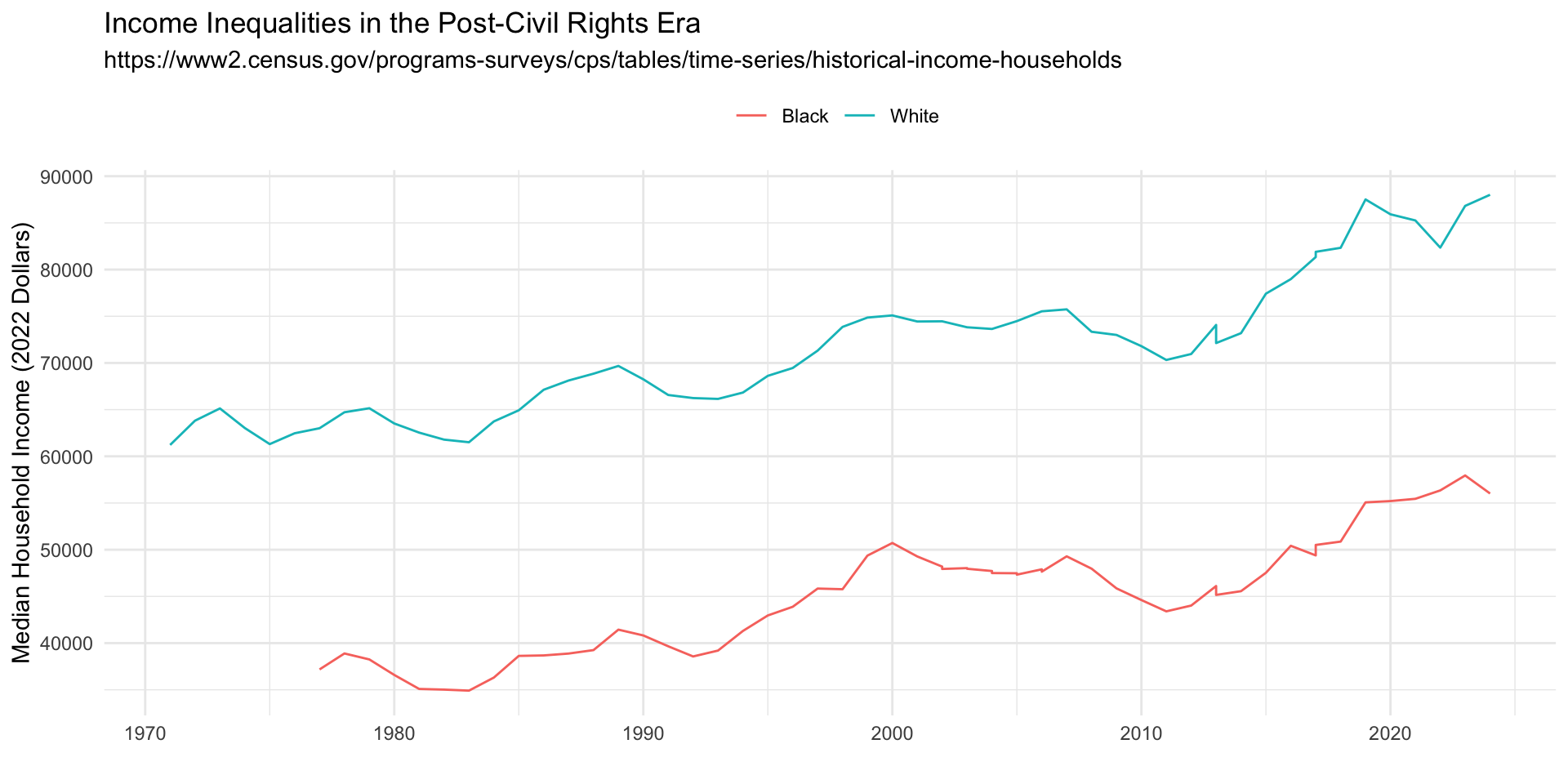
Closing the gap on racial inequalities
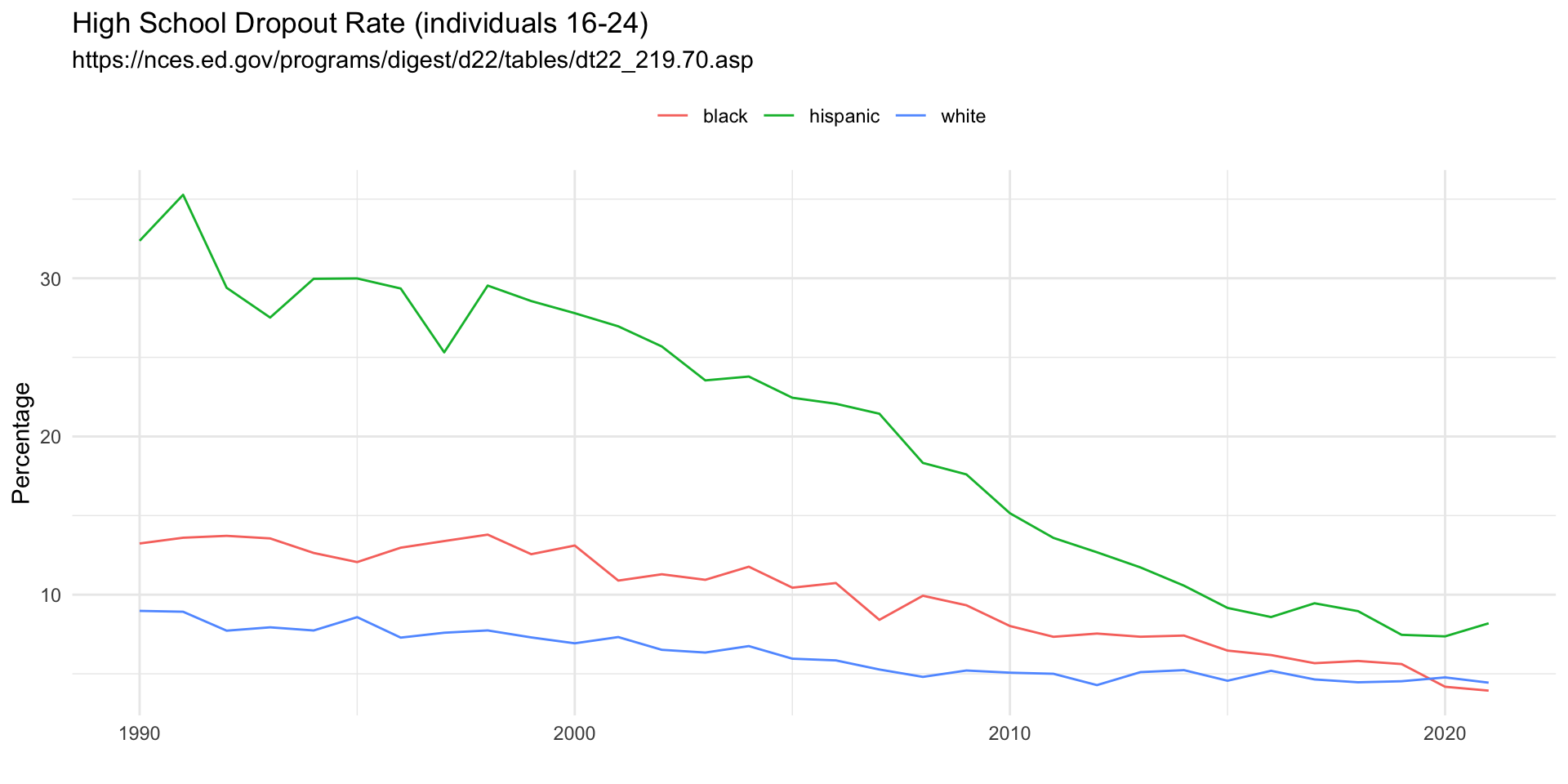
The complex pattern of racial inequality
There has undoubtedly been some positive progress in minimizing racial inequalities, in some areas, since the political reforms of the Civil Rights Era.
However, as our textbook concludes, “on virtually every measure available, even those that have improved over time, we can still observe a disturbing degree of inequality between Black and White Americans.”
Defining racism
One way to think about racism is that it involves prejudice, discrimination, and power.
- Can you help me understand the importance of power in this definition?
- Is it not racism if all we observe is prejudice and discrimination?