Economic Inequality and Poverty
SOC 131
Income and wealth inequalities
There are, obviously, many different ways that we can conceive of and measure economic inequality. We’ll discuss the following different approaches today:
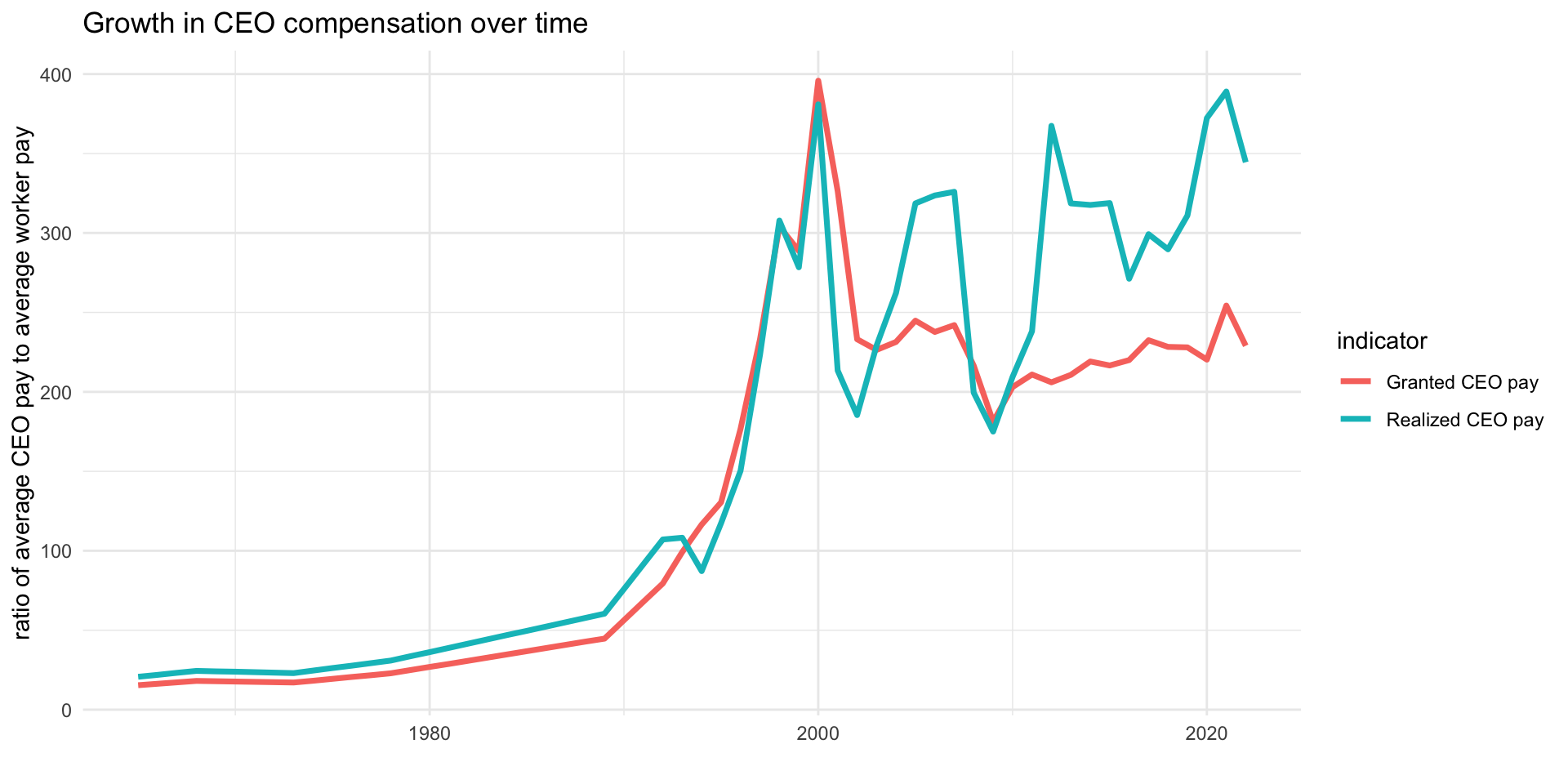
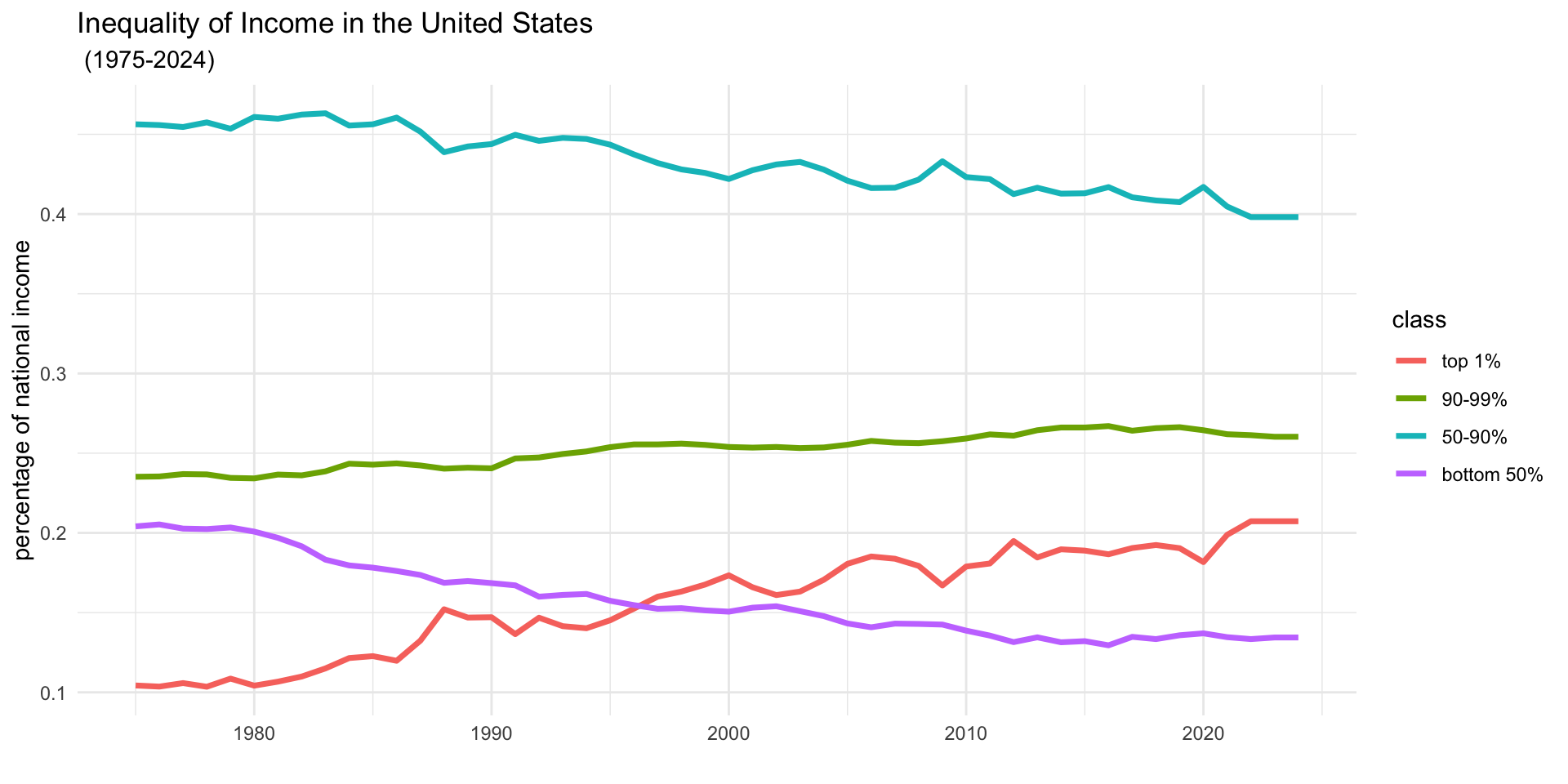
- Unequal distribution of income among socio-economic classes (such as CEOs vs. workers);
- Income and wealth inequalities among members of distinct socio-demographic groups (think racial- and/or gender-based inequalities);
- Income (and wealth) inequalities both internationally and at the global scale
Income inequality between classes
Income inequality between classes (2)
Income inequality in global perspective
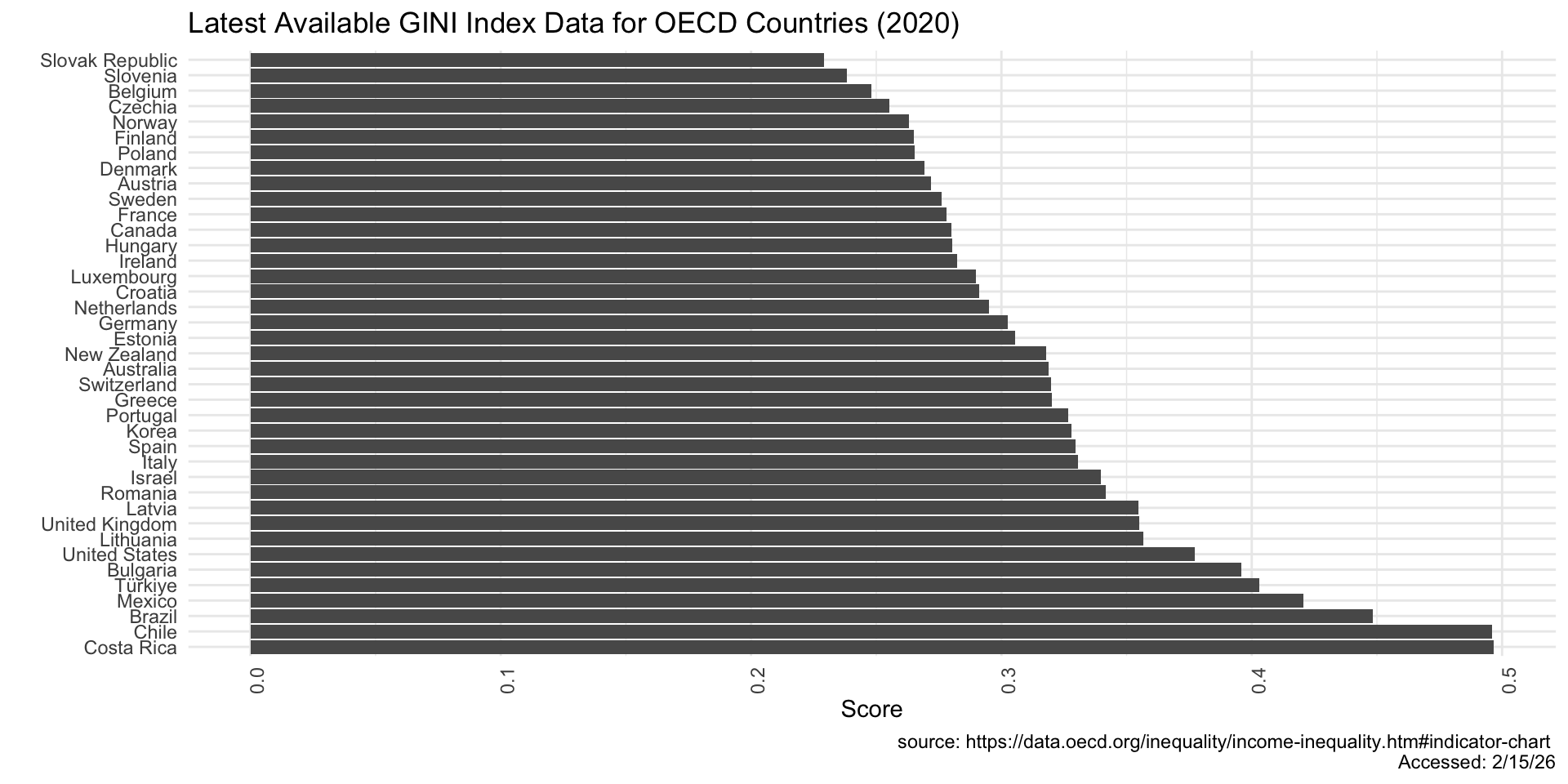
One important theme found in this chapter is that of economic inequality in global context.
I’ve gathered the latest data available from the Organization for Economic Cooperation and Development (OECD) showing the GINI Index scores for its 38 member countries. You can see a visualization of that data on the next slide. This shows that the United States has the fifth highest GINI Index score amongst all 38 OECD countries.
Small-group discussion
With others around you, try to explain what this data tells us by applying some of the ideas you’ve learned from our textbook. Please address the following questions, at the very least:
- What does this data tell you about how economic inequality in the United States as compared to other OECD countries?
- Are there specific aspects of the US class structure and economic system that can help us understand where the US falls on this list?
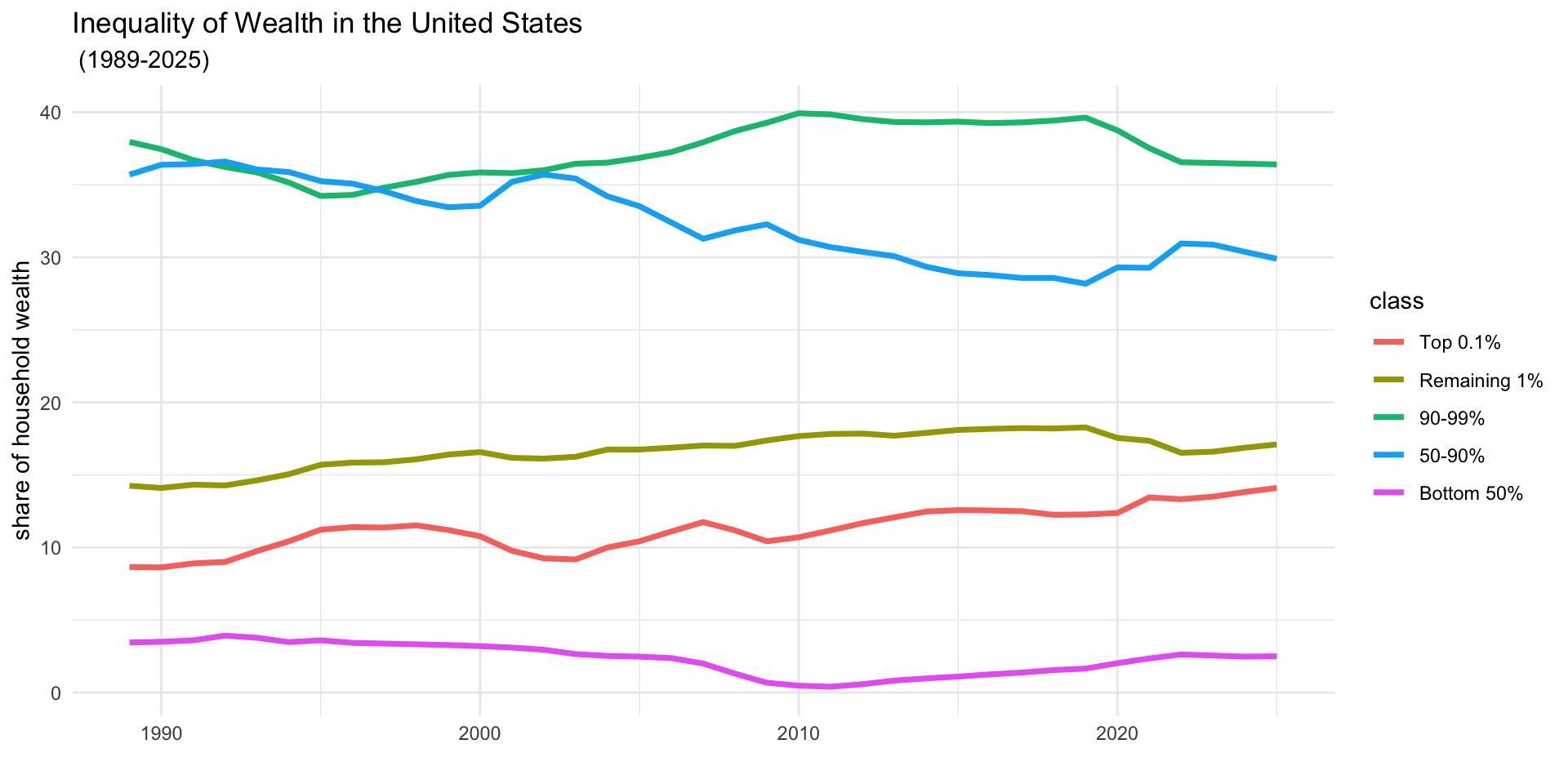
Class-based wealth inequalities
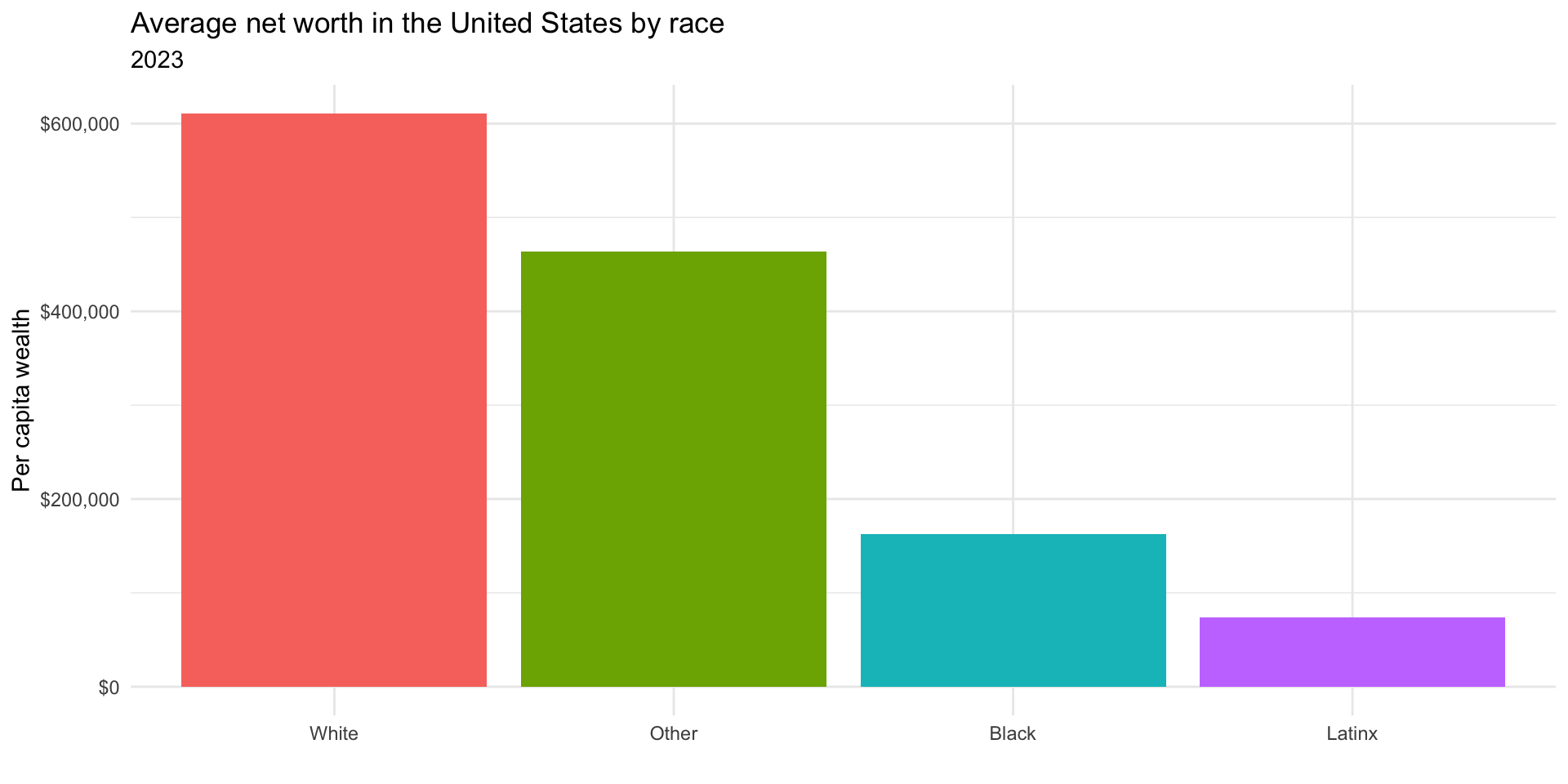
The racial wealth gap
Poverty
Small-group discussion
We’ve now seen that economic inequality in the United States and around the world is quite significant. What do you make of this data, and the underlying reality that it describes? In your small groups, I want you to discuss the structural causes of poverty and inequality, as this is the main point of sociological analysis of these trends.
Consider the following questions:
- Which of the stories and statistics presented in our assigned reading do you find most powerful in documenting and explaining economic inequality or the causes and consequences of poverty?
- Does this data make you reconsider whether the American Dream is a “myth” and/or whether social class is an achieved or ascribed status?